
Base design system
Establish consistent UI foundations across a product ecosystem. Unify diverse experiences with a comprehensive framework covering styles, expression, content, and accessibility.
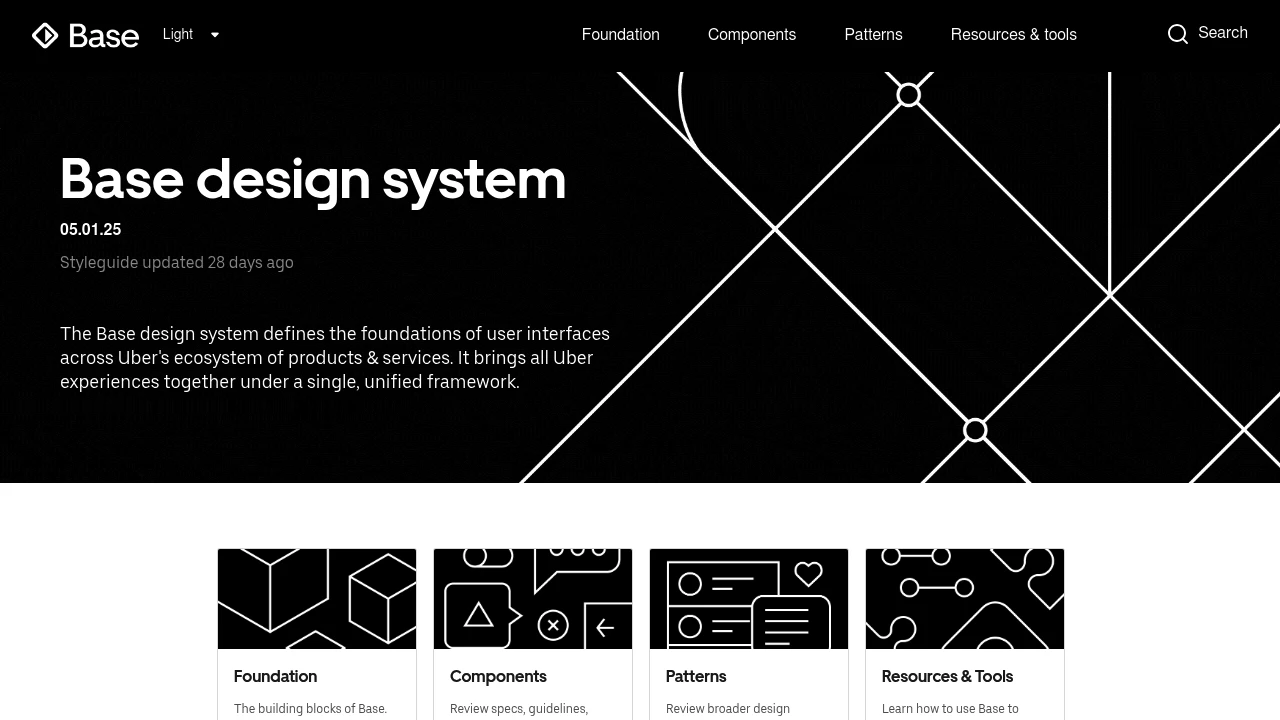
Base design system provides the foundational elements for user interfaces throughout Uber's extensive ecosystem of products and services. It serves as a unified framework, bringing consistency and coherence to all Uber experiences. This system ensures that whether you're using a rider app, a driver tool, or an internal platform, the interface feels familiar and intuitive.
Key areas covered by Base include:
- Styles: Comprehensive guidelines for color, typography, spacing, iconography, layout, and elevation.
- Expression: Principles for illustration, photography, and motion design, including transitions, to create engaging experiences.
- Content Design: Detailed guidance on voice, tone, grammar, terminology, and writing for various components, ensuring clear communication.
- Product Inclusion: A strong focus on accessibility, with resources for alternative text, building accessibility-first products, and designing for mobile screen readers.
By standardizing these core components, Base enables teams to develop high-quality, recognizable, and accessible user interfaces more efficiently, fostering a cohesive brand identity across all touchpoints.

 Untitled UI React
 Untitled UI
Similar to Base design system:

Design modern UIs faster in Figma. Eliminate tedious tasks.
Figma
Build visually appealing, consistent web UIs with an advanced Figma design framework. Offers 1400+ components, one-click dark mode, and easy customization.

Datadog's reusable user interface design system.
CompanyFigma+1 more
DRUIDS stands for “Datadog Reusable User Interface Design System.” It’s the primary UI foundation of the Datadog platform as well as numerous internal apps for our company.

Brainly's design system is the source of truth that will answer all your design questions.
CompanyFigma+1 more
Consistency is one of the strongest contributors to usability. Because standard ensures that our users can understand the individual interface elements in our product and that they know where to look for what features.